

Table of contents
Three years ago, a "snail mail club" was a fringe hobby. Today a single good club can earn an artist $800 to $3,000 a month with no employees, no warehouse, and a laptop. People do this from a corner of their living room.
I run MailClubly, the platform indie artists use to handle the operational side of their clubs. Before that I spent a lot of time watching creators stitch subscriptions together from Etsy, Patreon, spreadsheets, and blind luck. This post is everything I wish they had in front of them on day one.
What is a snail mail club, actually
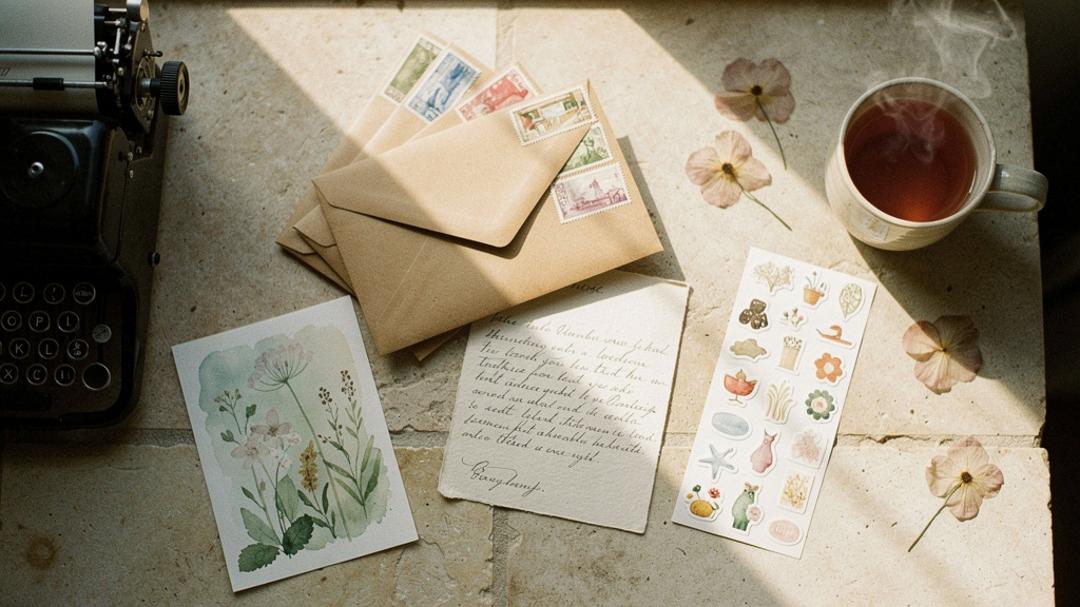
A snail mail club is a monthly (or biweekly) subscription where subscribers receive a physical envelope from you. Usually inside: one piece of art you made, some small extras (a sticker, a bookmark, a sheet of paper goods), and a handwritten or handwritten-ish note. Prices run $5 to $20 per month. Shipping is rolled into the price or added as a small flat fee.
The category is real. As of mid-2026, the MailClubly directory lists over 100 active clubs, ranging from a $4.50 postcard-only club out of the Blue Ridge Mountains to a $65 signed-photobook-of-the-month subscription. The genre is not disappearing. The audience is growing. The bottleneck is supply: too few creators, too many people who actually want mail.
Real clubs doing it well
Before theory, here are five artists quietly running excellent clubs. Each has been shipping consistently and has a happy subscriber base. Study their formats before you invent your own.
The Woodland Post — $11–$13/month
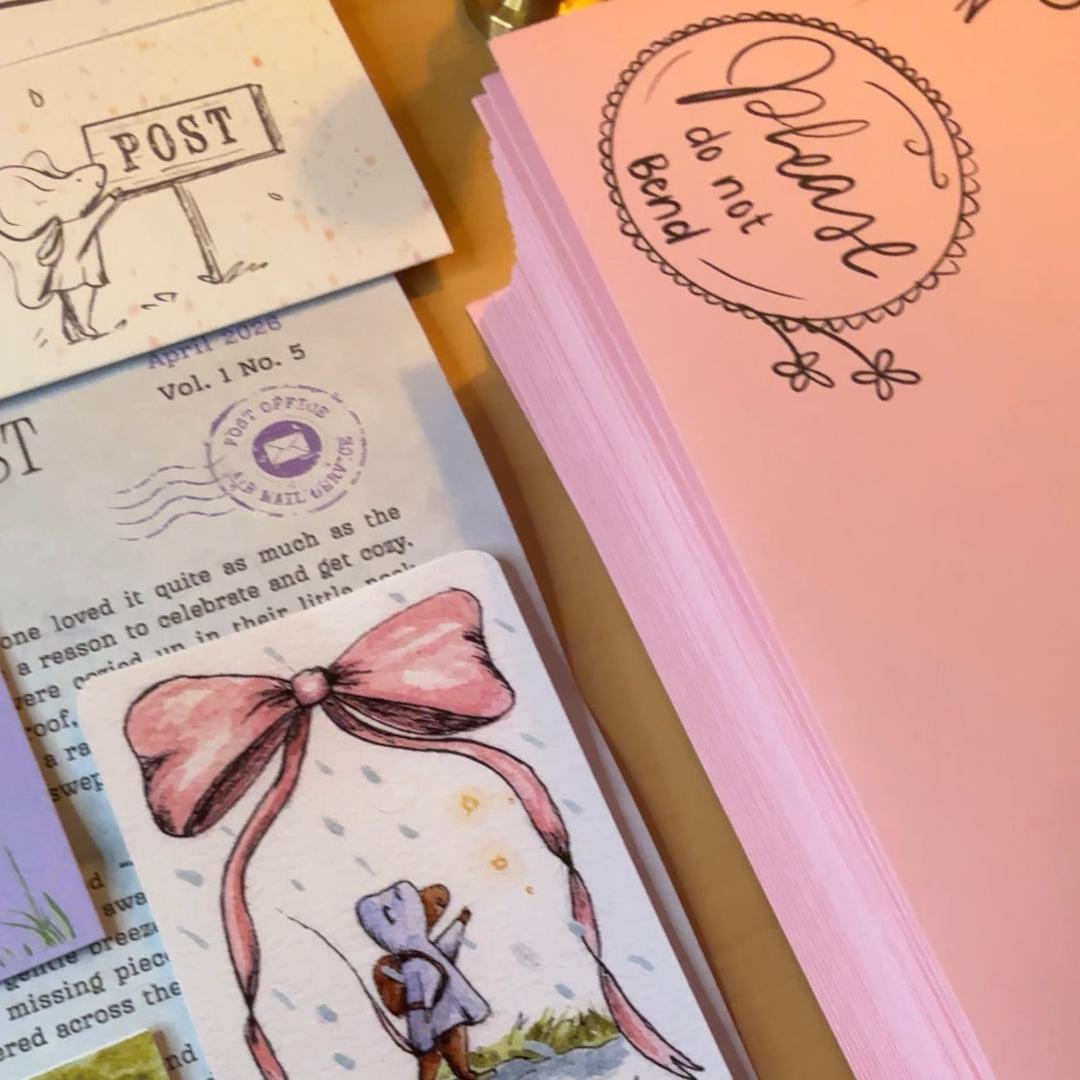
A 5×7 art print, a mini print, a handmade sticker, a mystery item, and a short letter. Tight, simple, consistent. The creator ships on the 15th every month with no exceptions. This is the modal successful small club in 2026.
artxnikki — $7/month
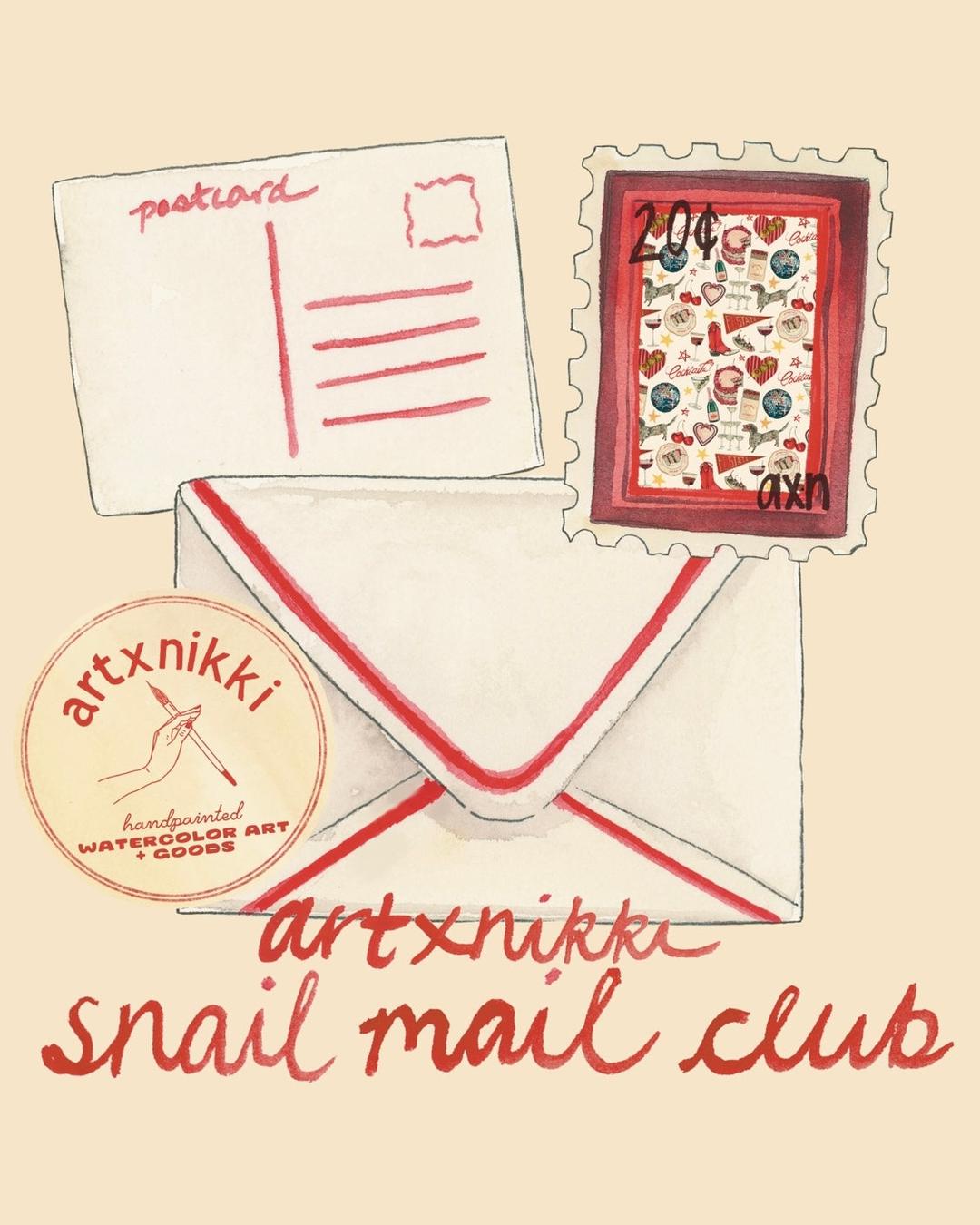
One postcard. One vinyl sticker. That's the entire offering. No bonuses, no letters, no tiers. Nikki has run this for over a year and it works because the product is obvious and the price is a rounding error for the buyer. Good example of "radical simplicity wins."
Puuung Happy Mail Club — $11/month, ships from Korea
Free worldwide shipping. Three postcards of the month's new illustration, one archive postcard, two die-cut stickers. One of the most-loved illustration subscriptions on the internet. Puuung had a huge social following before launching the club, which is a recurring theme in the clubs that scale.
Lorkelle — €10.50/month, ships from Ireland
Exclusive sticker, A5 print, pen-pal style letter. Free worldwide shipping via untracked letter post. Notable because Lorna proves you can run a profitable club outside the US and reach subscribers everywhere. European artists get far less attention than they deserve in this genre.

The Ink Post — $10/month, free worldwide shipping
An original linocut print, a heartfelt letter, journaling stickers, a seasonal recipe, and a monthly surprise. Reads like a letter from a quiet friend. This is what differentiation looks like in a crowded category: not more stuff, but more specific stuff.
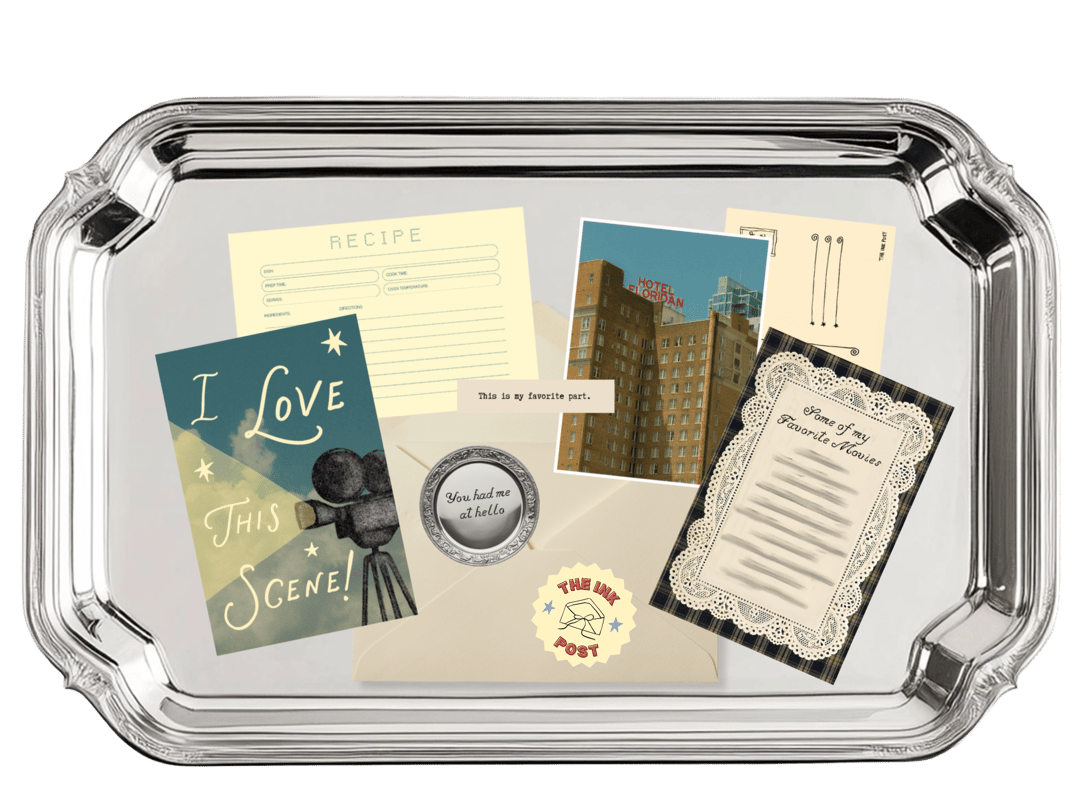
Notice the pattern: small, consistent, specific. None of these are trying to be a subscription box. They are letters with art inside, which is a different product category and a different relationship with the subscriber.
Clubs running on MailClubly right now
The examples above are clubs we admire from around the web. Here are a few running on MailClubly today — click into any of them to see how a real, live club page looks:
- HollerMail — $10.50/month, US. Handwritten letters straight out of Appalachia — "porch gossip, mountain mischief" — plus local photos and little art prints. The most-subscribed club in this list, and you can hear exactly why in the writing. Personality sells mail.
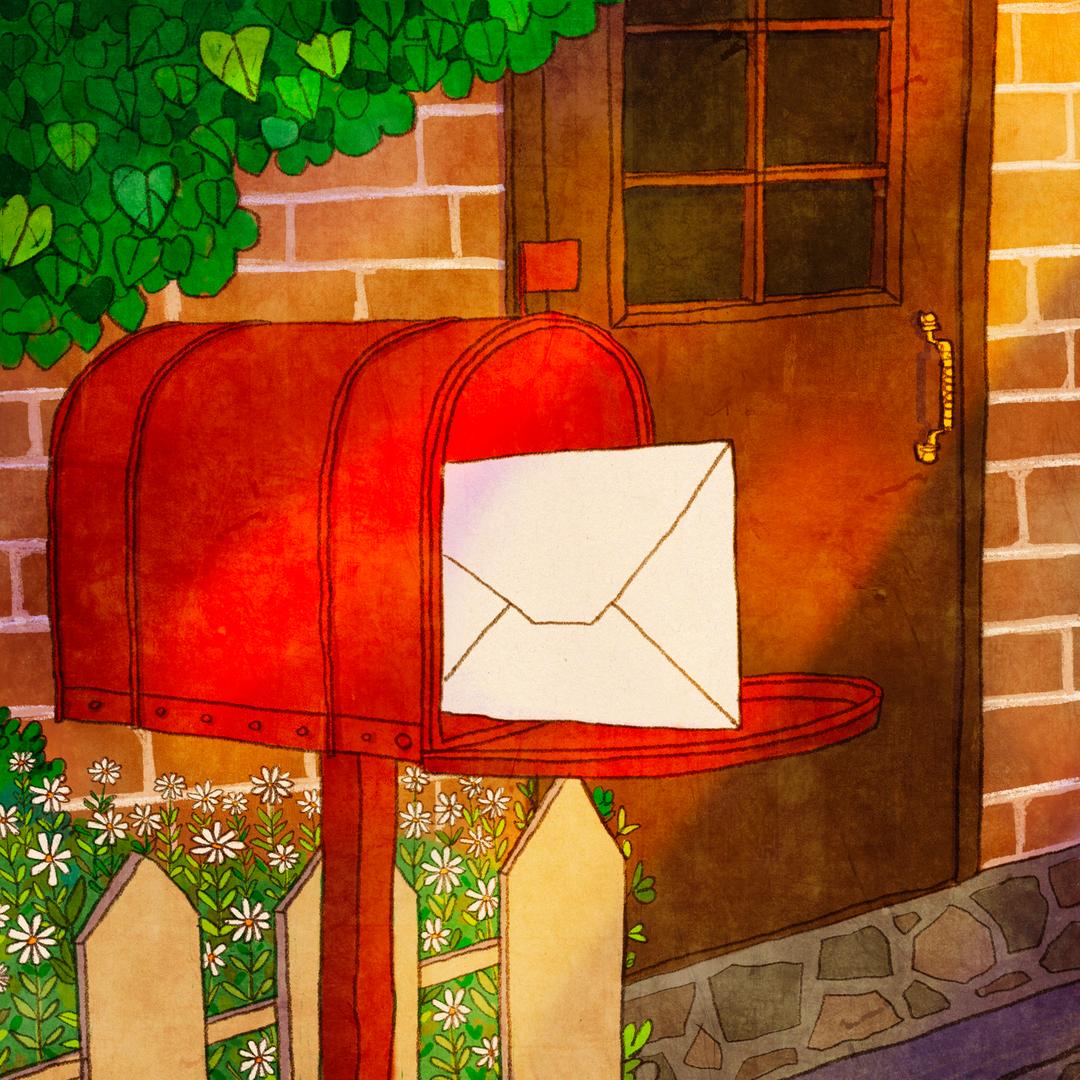
- Coast to Coast — $1.50/month, US. Emily, Dillon and their dog Eggs Benny mailing dispatches from a months-long cross-country road trip. Proof that a "mail club" can simply be a great story told on paper — no art degree required.
- Focus on the Good — $12/month, US. Karah's warm, creativity-first mail built around one idea: "there's always something good worth noticing." A clean template for a positive, wholesome club (and a nicely complete page to study).
- Fay Savage Arts Snail Mail Club — $15/month, US. Individually hand-painted envelopes from a mixed-media artist who wants to "bring back the romance and whimsy to mail." The premium, art-forward end of the format.
- La Pausa Postal — €8.99/month, from Spain and written entirely in Spanish. Violeta's "slow living" letters: monthly reflections, rituals, recipes, and small paper goods. Proof the format travels beyond English — MailClubly runs her page and subscriber emails fully in Spanish.
- Field Notes of the Unexplained — $10/month, US. Bekah June's monthly dossier on cryptids, folklore, and the paranormal. Proof that "mail people love" isn't only prints and stickers — a strong point of view carries a club.
The math, with real numbers
Let's do a 100-subscriber monthly club at $10 shipping included, US-based, envelope format.

| Line item | Per subscriber | At 100 subs |
|---|---|---|
| Subscription revenue | $10.00 | $1,000 |
| USPS Forever stamp (domestic) | −$0.73 | −$73 |
| Kraft envelope | −$0.12 | −$12 |
| Print production (4×6 color, ordered in bulk) | −$0.60 | −$60 |
| Sticker (die-cut vinyl, bulk) | −$0.35 | −$35 |
| Letter paper and printing | −$0.08 | −$8 |
| Stripe fees (2.9% + $0.30) | −$0.59 | −$59 |
| Platform fee (MailClubly Pro, flat $9/mo) | −$0.09 | −$9 |
| Net per month | $7.44 | $744 |
The table above uses MailClubly Pro — a flat $9/month that waives the platform commission entirely, so it never grows with your revenue. Past roughly 11 subscribers it's the cheapest way to run a club. If you're just starting out, the Free plan instead takes 8% per payment, with no monthly fee and nothing owed until you actually get paid — so you can launch with zero fixed costs and switch to Pro once you have a handful of subscribers. Stripe's own processing fees apply on either plan.
Your time is free in this math. That's the honest version. If you spend 8 hours on the pack-and-ship day, you're making $93/hour, which is good for a side income, tolerable as a sole income if you keep growing.
International subscribers change the math meaningfully. A First-Class Mail International stamp is around $1.65 depending on weight and zone, and if you cover shipping in the subscription price your margin on international subs might be half that of domestic. Many clubs charge +$2/month flat for international to keep the math clean.
Scaling from here: at 250 subscribers you're at roughly $1,875/month net. At 500 subscribers (which is what the better-established clubs in the directory actually have) you're at $3,750/month net (the flat $9 Pro fee doesn't move as you grow). This is where the math gets interesting and your time becomes the scarce resource, not demand.
What goes in the envelope
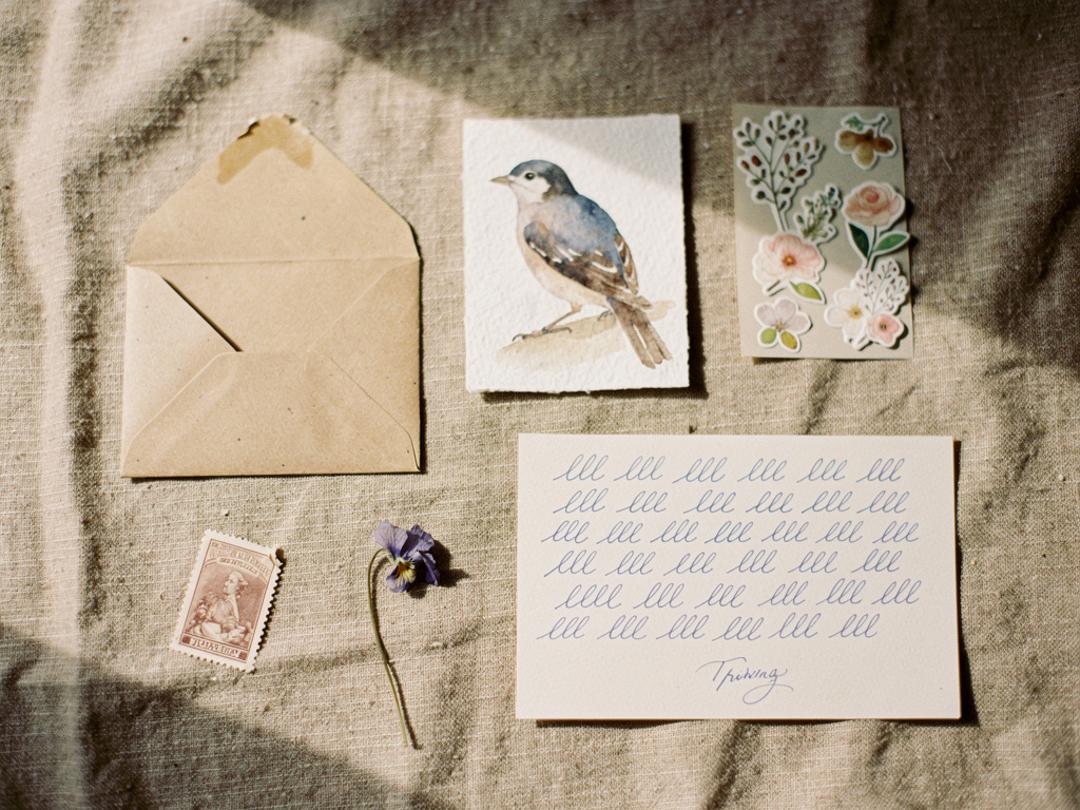
The package needs to clear two bars:
1. It has to feel like more than the price. A $10 club with just a $5 print feels underwhelming. Same club with a $5 print plus a $0.50 sticker, a $0.10 dried flower, a hand-stamped envelope, and a typed letter feels overwhelming in a good way. Perceived abundance costs almost nothing.
2. It has to be consistent. Subscribers are comparing month 3 to month 1. If month 3 is "thinner," they cancel. Build the format first, then fit your art to it, not the other way around.
The formats that work in 2026, from the directory:
- Single-item clubs: one postcard (The Blue Bike at $4.50), one sticker + one postcard (artxnikki at $7). Cheap to run, easy to stay consistent, low churn.
- Standard envelope clubs: one print + one sticker + a letter + one small surprise ($8–$12). This is the mode. The Woodland Post, AnnMarie Henderson, Blooms Club, Courtney Stanley all fit here.
- Premium envelope clubs: 5×7 or A5 print, letter, multiple stickers, paper goods, recipe, playlist link, mystery item ($12–$18). The Ink Post, The Tiny Post, Monthly Muse Mail Club.
- Box format: a cardboard box with 10+ items, usually a curation company rather than a solo artist ($20–$35). STICKII, Simply Gilded, Big Moods. This is a different product category than a snail mail club, but the subscribers overlap heavily.
Don't start at premium. Start at standard, prove you can ship it, then scale the package upward as your subscriber base grows.
Pricing it right

Pricing in this category is surprisingly consistent. From the directory:
| Club | Price | Format |
|---|---|---|
| The Blue Bike Postcard Club | $4.50 | One postcard |
| artxnikki | $7 | Postcard + sticker |
| AnnMarie Henderson | $8 | Mini print + sticker + letter |
| Blooms Club | $8 | Sticker set + letter + prompts |
| Courtney Stanley | $6–$8 | Postcard or print + letter |
| Sadie's Stickers | $9.75 | Sticker sheet + decal + postcard + letter |
| Amanda Oleander | $9.50–$15.50 | Mini print + note (premium adds coloring page + sticker) |
| The Ink Post | $10 | Linocut print + letter + stickers + recipe |
| Puuung Happy Mail | $11 | 3 postcards + 2 stickers + archive card |
| The Woodland Post | $11–$13 | Print + mini print + sticker + mystery + letter |
The median price is around $10. Below $7 you leave real money on the table unless you're testing the format. Above $15 you need obvious reason (signed originals, bigger prints, more volume). Between $8 and $12 is the sweet spot where subscribers do the least math.
Use a small price bump for international ($2/month is the standard) rather than trying to find a single price that works globally.
Where to host it
Four options for creators starting out. Honest tradeoffs.
Etsy. Pros: traffic is already there, you don't need to build an audience. Cons: Etsy's subscription product flow is janky, fees stack up (listing + transaction + payment processing + ads = 10–15% of every sale), and the brand relationship is with Etsy, not you. Good for testing whether anyone will pay. Bad for running a long-term business.
Patreon. Pros: built-in community tools (DMs, posts), subscriber expectation is pre-set, international payments work. Cons: Patreon takes 8–12%, physical shipping is bolted on rather than native, and Patreon members cancel when their favorite podcast releases a bad episode. The churn culture is different from mail subscribers.
Shopify (or Squarespace). Pros: total brand control, you own the subscriber list, clean checkout. Cons: $29–$39/month base, you need a subscription app ($10–$30/month), and you're responsible for shipping logistics and cohort billing entirely yourself. Most solo creators hit a wall around 50 subscribers.
MailClubly. Full disclosure, I built it, so here's the honest version. MailClubly handles the things creators burn out on: monthly cohort billing (charging everyone on the same day so you ship everyone in the same batch), subscriber dashboard, shipping-address management, Stripe payouts, pause/skip controls, and localized club pages + subscriber emails (English, German, French, Spanish). Pricing is a Free plan (8% per payment, only when you earn) or MailClubly Pro at $9/month, which waives the 8% commission; Stripe's processing fees apply either way. It does not replace your need to do marketing or make art. If you're planning to grow past 30 subscribers and you'd rather spend Saturday making art than chasing address changes, this is why MailClubly exists.
If you're testing a concept, start on Etsy or Patreon. If you know you want a real business, skip straight to a real platform.
Shipping is the part nobody warns you about

Three things to know before your first shipping day.
Untracked letter mail is standard. The entire indie-mail-club economy runs on USPS First-Class Mail and international letter post. Tracking is not included. It's normal. Most subscribers understand this. The few who don't will email you asking where their mail is, and you will type the same apology twelve times. Add an FAQ on your sign-up page: mail ships on the 15th, allow 5–14 days domestic, 2–6 weeks international, no tracking. This prevents most of the confusion.
International shipping is not optional if you want to grow. Puuung (Korea), Lorkelle (Ireland), Fleurette Studio (New Zealand), The Mossheart Mail Club (UK) all ship worldwide and all have subscribers mostly outside their home country. If you're US-based and refuse international, you're cutting your addressable market roughly in half. Charge a flat $2–$3 per month international surcharge and move on.
The post office is not your friend on busy days. If you're mailing 50+ envelopes at once, you need to batch, weigh, and buy postage online (USPS Click-N-Ship or pay-as-you-go via PirateShip). Walking into the post office with a grocery bag of envelopes and standing in line is the quickest way to never want to mail anything again. You can also schedule a free mail pickup from your porch.
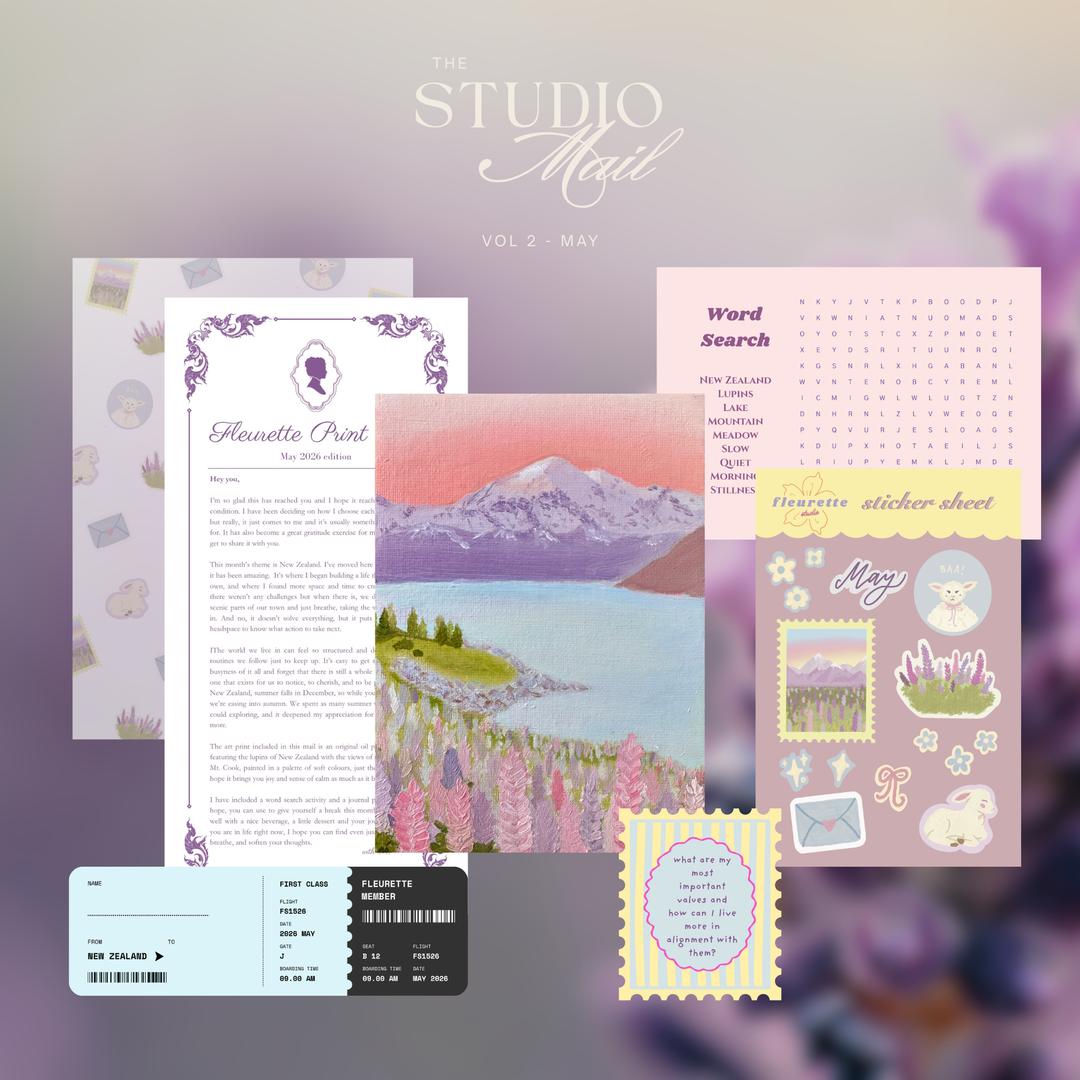
(That's The Studio Mail by Fleurette, shipping from New Zealand to subscribers in 30+ countries. $18 USD a month, free worldwide, signed watercolor prints. The whole operation runs out of a small studio in Auckland.)
Cadence and cohort billing
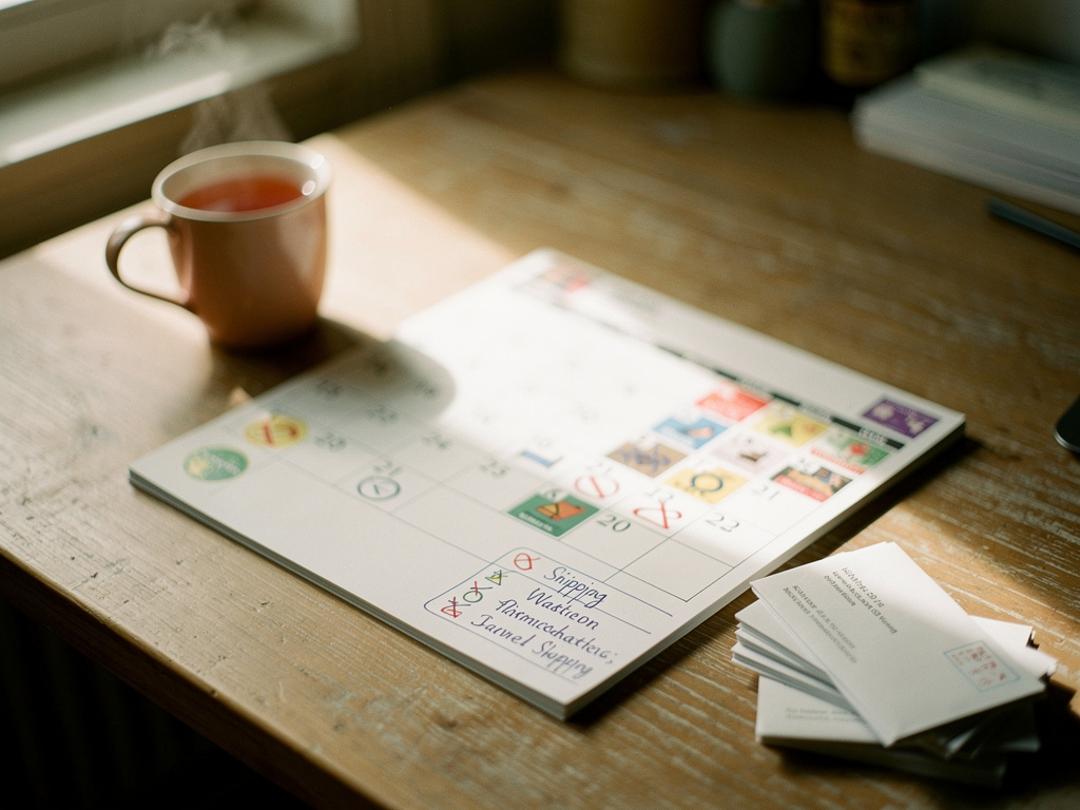
This is the part where most new clubs break themselves.
If you let subscribers sign up whenever they want and start billing them from that anniversary date, you end up with a calendar that looks like chaos: charging 30 subscribers on the 14th, 18 on the 22nd, 12 on the 3rd of next month, and so on. Every day is a shipping day, which means no day is really a shipping day.
Cohort billing fixes this. Everyone on the club is billed on the same day each month (say the 25th), which means you pack-and-ship the whole cohort together (say by the 1st), and subscribers know what to expect. If someone signs up on the 14th, they wait until the 25th to be billed and receive their first envelope at the beginning of the next month. Explain this on sign-up. Most people are fine with it.
The cutoff rule most clubs use: sign up by the [X]th to get this month's mail. Past that date, you're on next month's list. This is how The Woodland Post, The Wildflower Post, Amanda Oleander, and most of the well-run clubs in the directory operate. It is also how MailClubly handles it natively, because building cohort billing from scratch on Shopify is miserable.
Your first 25 subscribers
Almost all the successful clubs started the same way: the artist already had an audience. Not necessarily a huge one. 2,000 followers is enough if they're real.
If you're starting from zero, budget six months before you have a real subscription business. In that six months, here's what actually works:
TikTok and Instagram Reels of your packing process. Not polished product reels. The messy version. Folding envelopes, writing addresses, applying stamps, dropping the stack at the post box. Watchable. Satisfying. Gets recommended algorithmically far more than still-image posts. This is how Birdsong (The Perch Post) went from zero to 1,600 subscribers in under a year in 2025.
An email list before a sign-up link. Before the club is live, collect emails with a simple "tell me when it's ready" page. When launch day comes, you email the list. Open rates on these launch emails are routinely 30–50% and conversion is much higher than any social media post. Don't skip this.
Small "pre-orders" to test the product. Before the subscription is live, sell 10 single copies of month one as a one-time purchase. Pack and ship them the same way you plan to ship subscribers. You'll discover three things you forgot (which paper stock to use, how sticky the envelope seal is, how long it actually takes to address 10 envelopes). Then launch.
Referral stickers. Include a small bonus sticker in month one that says something like "you should be getting mail like this too." Subscribers stick them on laptops and water bottles. This is essentially how sticker clubs grow themselves.
Common mistakes
Too many tiers. Don't launch with Basic, Plus, Deluxe, and Premium. Launch with one tier. Add a premium tier at month six if the demand is there.
Promising too much. "A signed original painting every month for $12" is a promise that will break you at 80 subscribers. Promise what you can make 300 of in a long Saturday afternoon.
Inconsistent ship dates. Shipping late once is fine. Shipping late three months in a row kills the club. Pick a ship day and treat it like an immovable appointment.
Custom envelopes on day one. You don't need custom-printed envelopes. Kraft envelopes with a stamped logo look beautiful and cost $0.10. Save custom printing for when you hit 500 subscribers.
Too many social channels. Pick one. Post consistently. Learn what works there before adding a second one. Artists who try to be on TikTok + Instagram + Twitter + Threads + Pinterest from day one post mediocre content to five audiences instead of great content to one.
A 30-day launch plan
Week 1: Define the product. One tier, one price, one ship day. Write a one-paragraph description of what subscribers receive. Design month one.
Week 2: Make month one. 30 copies of everything. Practice-pack one envelope. Photograph the finished envelope, open and closed, with the contents laid out. These photos are your product shots, your social content, and your sign-up page all at once.
Week 3: Build the sign-up page. A single page: a headline, the envelope photos, the price, three bullet points about what's inside, a sign-up button. That's it. List it on /clubs when you're ready (we take editorial submissions at MailClubly).
Week 4: Soft launch to the email list and social. Give yourself 10 paying subscribers before you consider it a real club. The first 10 are the hardest. After that, the pattern compounds.
The one thing nobody tells you
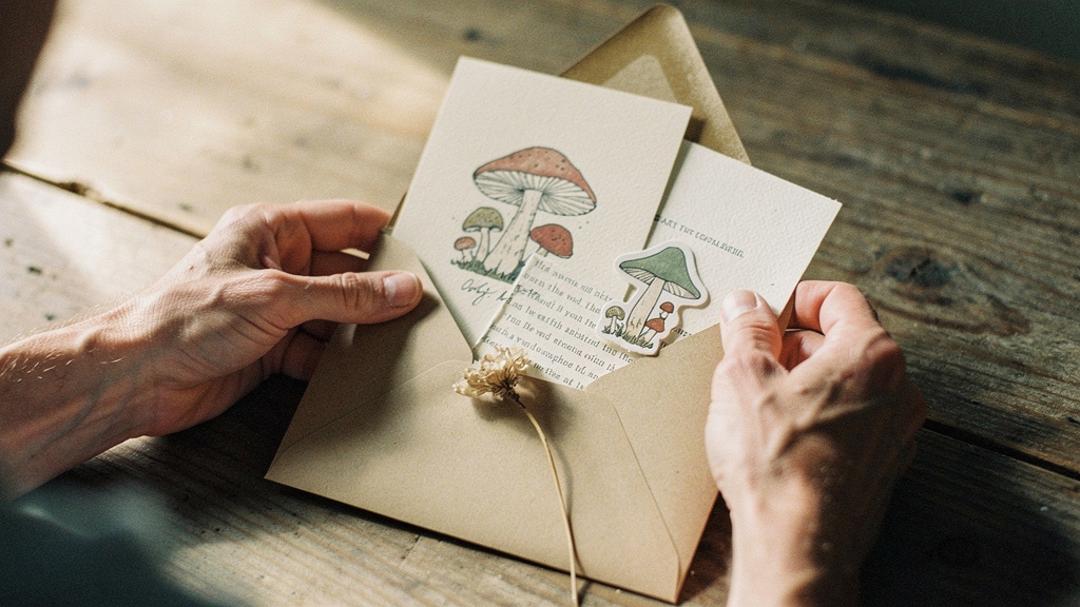
Running a snail mail club is not scalable the way a SaaS app is. You cannot 10x overnight. The art does not make itself. The envelopes do not address themselves. At some point you have to decide whether your club is a side income you like, or a real business where you hire someone to help you pack.
The creators who scale past 500 subscribers almost all do one of two things: they add an assistant for pack-and-ship days, or they simplify the product (fewer items, cleaner flow) so pack time stays under three hours. A few do both.
But everyone, every single person in the directory, started with one envelope, a roll of stamps, and a belief that somebody out there wanted this. They were right.
If you're ready to start, MailClubly handles the boring parts so you can focus on the art. The first club is free to set up. Pricing is either 8% per payment (Free plan, charged only when you make money) or a flat $9/month with MailClubly Pro that waives the commission entirely — whichever works out cheaper for your club.
Good luck. Write your friends.
— Alex

Article by
Alex Carlier
I build MailClubly, the platform indie artists use to run their snail mail clubs. Before this I spent years watching creators stitch subscriptions together from Etsy, Patreon, spreadsheets, and blind luck. MailClubly exists so they don't have to.