
Do mail clubs make money in 2026? Real prices, costs and profit per envelope
A $10 envelope leaves about $7 after the stamp, the contents and the fees. Whether that is worth your month depends on how many members you have and how many hours they take. Creators' own figures, each platform's fees, and a calculator.

Table of contents
Per envelope, yes. A $10 mail club envelope that costs about a dollar to fill and one stamp to mail leaves about $7 after fees ($6.59 to $7.59 depending on the platform, before any monthly plan).
Whether that adds up to money worth your month depends on two numbers most club tutorials leave out: how many members you have, and how many hours the envelopes take you. This guide works through both, with creators' own figures, each platform's fees on November 14, 2026, and what the hundreds of clubs on MailClubly look like.
I run MailClubly, one of the platforms compared below, so every fee links to the page it was read on and you can check my sums. This page has no affiliate links.
Profit per envelope: where $10 goes
Start with one envelope. Every other figure in this guide is that one multiplied.
| Where it goes | Per envelope | Share of $10 |
|---|---|---|
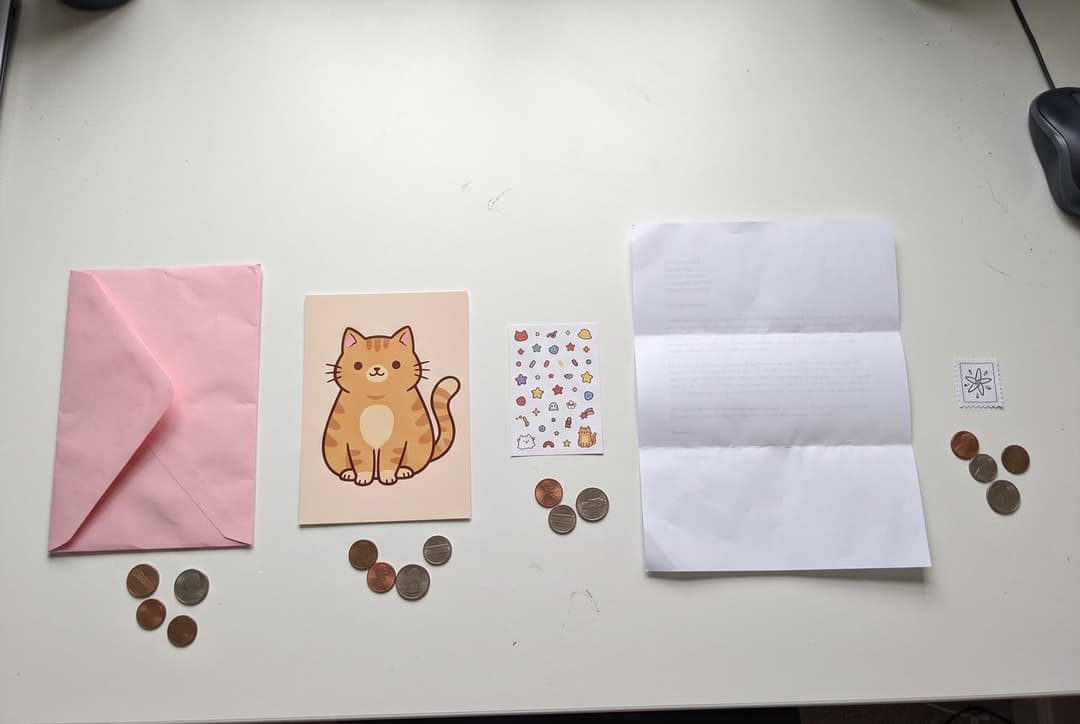
| What is in the envelope | $1.00 | 10% |
| Stamp, letter up to 1 oz | $0.82 | 8% |
| Platform fee (MailClubly Free, 8%) | $0.80 | 8% |
| Card processing (Stripe, 2.9% + $0.30) | $0.59 | 6% |
| Left for you | $6.79 | 68% |
"Left for you" is before tax and before your time. The stamp is the USPS price in force since July 12, 2026 (USPS price list), and the fees are in the platform table further down. The $1.00 of contents is my assumption, based on what creators say theirs cost.
Amaya Jade tracks a full month of her Pattern Club on camera, more than 900 orders. Her list: sticker paper at $0.28 a sheet (two patterns per sheet), a $0.02 cellophane bag, a $0.04 card, an $0.18 envelope and a $0.78 stamp, which she notes has since gone up to $0.82. Then the part people forget: "After Shopify's transaction fees, I'm paying about 60 cents per order. With that added on, the base tier costs $1.86" (YouTube at 11:06).
Maggie Bean prints her own stickers for a club of eight members. Her materials and shipping come to $1.70 to $1.80 per US envelope, which she says leaves out printer ink and the time to design, print, cut and pack (YouTube at 5:54).
Both print and cut at home, which is cheap in materials and expensive in hours. Clubs that order from print services pay more: their prices for 50 to 500 copies are in where to print for a mail club. The cost of printing at home is in the printer guide.
Postage is the line to watch
"I spend the most money on stamps," says Alexandra Franzese, who mails about 170 letters a month (YouTube at 9:01).
One Forever stamp covers a flexible envelope up to 1 oz. The second ounce costs $0.29 more, and a square or stiff envelope costs $0.49 more. On the $10 example, drifting from 1 oz to 2 oz takes 4% of your profit on every envelope.
JEM AND COZY's envelopes weigh "like 1.6 oz" in the months they hold a sticky notepad, so she buys additional-ounce stamps for those (YouTube at 7:11).
Weigh a fully packed envelope on a kitchen scale and design it to sit a few grams under the line. The stamp guide and its calculator tell you which side your envelope falls on before you buy a roll.
What creators say they keep
Few creators publish a margin. These did.
"I had no idea that Patreon take that much fees from each membership. So, from $10 tier, I actually get around $8.70. After materials and shipping, so, that leaves me with around $7 per member."
Patreon's published fees give $8.41 on a $10 payment for a page on its current plan, so take the $7 as her own round number.
Katie Mai's top tier holds a double-sided print, a sticker, a bookmark and a letter. Her costs below include Patreon's fees.
"So, with all of that, my expenses are around $7.50 per letter for the $18 tier. So, I profit around $10 per letter before taxes, around $7 after taxes."
 Katie MaiArt Mail Club, about 600 members on Patreon · YouTube, at 13:40
Hannah Gustafson, whose club The Tiny Post mails about 6,000 letters a month at $11, set her price to "make about $4 to $6 per letter" and built the envelope backwards from that: what fits in one ounce and still leaves the margin (YouTube at 4:54).
Then the other side. Lindsey of Single Sploot charged $15 for three vinyl stickers and never had more than about seven members.
"I was actually losing money on my Patreon every single month since I opened it back in January of 2023."
 LindseySingle Sploot, sticker club on Patreon, closed in 2025 · YouTube, at 5:17
bre ran Zine Club for four years, with a $10 mailed tier, printing, trimming and stapling the zines herself. Her verdict when she closed it: "If I wanted Zine Club to be profitable, I think it would have cost like 30 bucks to be part of the club" (YouTube at 8:50).
Outlaw Creative's first issue was eight glossy pages in a tracked manila envelope for $11 a month: "the whole thing operation cost me about $9.50 each. So, I really only made like a dollar" (YouTube at 1:28).
The clubs that keep $4 to $7 send light, flat paper that stays under an ounce and costs a dollar or two to make. The ones that lose money send something costly to produce (three vinyl stickers, a hand-stapled zine, glossy pages) at a price that does not cover it.
Profit per hour
Under JEM AND COZY's and Amaya Jade's videos, viewers ask the two questions that matter: "How much are you actually earning a month, net, after 100% of your expenses?" and "What do you make per hour?" (JEM AND COZY, Amaya Jade). Almost nobody answers the second. This is what creators do say about their time:
- Riley Rose, about 80 envelopes a month: printing the envelopes "took about 2 hours" and printing the postcards takes "between 4 and 6 hours". That is before cutting, stuffing or drawing anything (YouTube at 2:19).
- Fiorenza Art, who orders everything from print services and pays her mother to pack: "a little over 40 hours" a month, from ideas to the mailbox. "It is a full-time gig" (YouTube at 2:08).
- Alexandra Franzese, 174 members: "I try to spend about 2 weeks straight doing mail club stuff and then 2 weeks off" (YouTube at 12:36).
- Martina Calvi, who closed a club of more than 1,000 subscribers: "Quite simply, a mail club is 20% design and creativity, 80% physical labour" (her Substack).
None of them gives an hourly figure, so I turned the question around: how many hours does a club pay for? The table takes the $6.79 envelope from above and a yardstick wage of $15 an hour. The calculator takes your own figure.
| Paying members | Left per month | Hours it pays for at $15 an hour |
|---|---|---|
| 4 | $27 | under 2 |
| 10 | $68 | 4.5 |
| 24 | $163 | 11 |
| 100 | $679 | 45 |
These are estimates from one example envelope. Read them against Riley Rose's six to eight hours of printing alone for 80 envelopes. A club of 4 does not pay for the evening it takes. A club of 100 pays for about a week of work, if the work fits in a week.
Brenna Lanning, whose sticker club passed 1,100 subscribers in seven months, told Creative Lives in Progress: "If I could go back in time, I would have timed myself packing a single envelope." Do that before anything else on this page.
The profit calculator
You need five numbers: your price, your members (or the number you are aiming for), what one envelope costs to fill, its postage, and your hours.
| Platform | Fees, a payment | Left for you, a month |
|---|---|---|
| Stripe on your own | $0.66 | $150.40 |
| Ko-fi | $1.09 | $141.80 |
| MailClubly Pro | $0.59+ $12.00 a month | $139.80 |
| Ko-fi Gold | $0.59+ $12.00 a month | $139.80 |
| MailClubly Free | $1.39 | $135.80 |
| Etsy | $1.40 | $135.60 |
| Patreon | $1.59 | $131.80 |
| Shopify Basic | $0.59+ $39.00 a month | $112.80 |
Sorted by what is left. The table compares fees only. It says nothing about what each platform does for a mail club (addresses, cut-off dates, shipping by country), which is the other half of the choice.
Take-home at $8, $10 and $12 on each platform
This is what one monthly payment leaves after the platform's and the card processor's fees, before the stamp and the contents, for a US club and a member paying with a US card. Each fee was read on the platform's own page on November 14, 2026, linked under the table.
| Platform | $8 | $10 | $12 | Fixed cost a month |
|---|---|---|---|---|
| MailClubly Pro | $7.47 | $9.41 | $11.35 | $12 |
| Ko-fi Gold | $7.47 | $9.41 | $11.35 | $12 |
| Shopify Basic | $7.47 | $9.41 | $11.35 | $39 |
| Stripe on your own | $7.41 | $9.34 | $11.27 | none |
| Ko-fi | $7.07 | $8.91 | $10.75 | none |
| MailClubly Free | $6.83 | $8.61 | $10.39 | none |
| Etsy | $6.79 | $8.60 | $10.41 | none |
| Patreon | $6.67 | $8.41 | $10.15 | none |
The first three rows are identical because all three charge card processing only (2.9% + $0.30) and make their money on the monthly plan.
- MailClubly: 8% of each payment on the free plan, shipping included. Pro takes 0% for $12 a month, or $120 a year. Stripe's card fee applies on both (pricing).
- Patreon: 10% for any page published after August 4, 2025, plus 2.9% + $0.30 processing. Older pages keep the plan they had (5%, 8% or more). Not in the table: Apple's 30% on memberships bought inside the iOS app (Patreon, Creator fees overview).
- Ko-fi: 5% on memberships, on top of the usual fee of your own Stripe or PayPal account. Ko-fi Gold removes the 5% for $12 a month, but only on memberships that start after you subscribe to it (Does Ko-fi take a fee?, What is Ko-fi Gold?).
- Shopify: the Basic plan is $39 a month, or $29 a month paid yearly, and cards cost 2.9% + $0.30. Subscriptions need an app; Shopify's own is free (Shopify pricing, Shopify Subscriptions).
- Etsy: $0.20 to list, a 6.5% transaction fee on the price and the shipping, and 3% + $0.25 for payment processing. Etsy's fee pages describe no recurring billing for buyers, so the table counts one order a month (Etsy's fees, processing fees).
- Stripe on your own (a payment link or your own checkout): 2.9% + $0.30 per card payment, plus 0.7% for recurring billing (Stripe pricing).
A monthly plan only pays past a certain size. At $10, a $12 plan (ours or Ko-fi's) costs less than an 8% fee from 16 members, and less than a 5% fee from 25. Shopify's $39 needs about 50 members before it beats an 8% fee. Until then, start with no fixed cost and switch when the sums say so.
Fees are the small half of the choice
For a club of 20 members at $10, the whole table (Shopify's monthly plan aside) spans about $20 a month. One evening of your time is worth more than that.
A payment link takes the least and does nothing else: the sign-up page, the cut-off date, the address list and the "where is my letter" emails are yours. JEM AND COZY, on Patreon when she filmed in early 2026, says "it takes 8% of my income from me every month" and adds that Patreon has no way to print a mailing list from its site (YouTube at 14:40).
So count the fee and the hours together. Then put the hours you save into the two things only you can do: the art, and telling people the club exists.
Most clubs are small
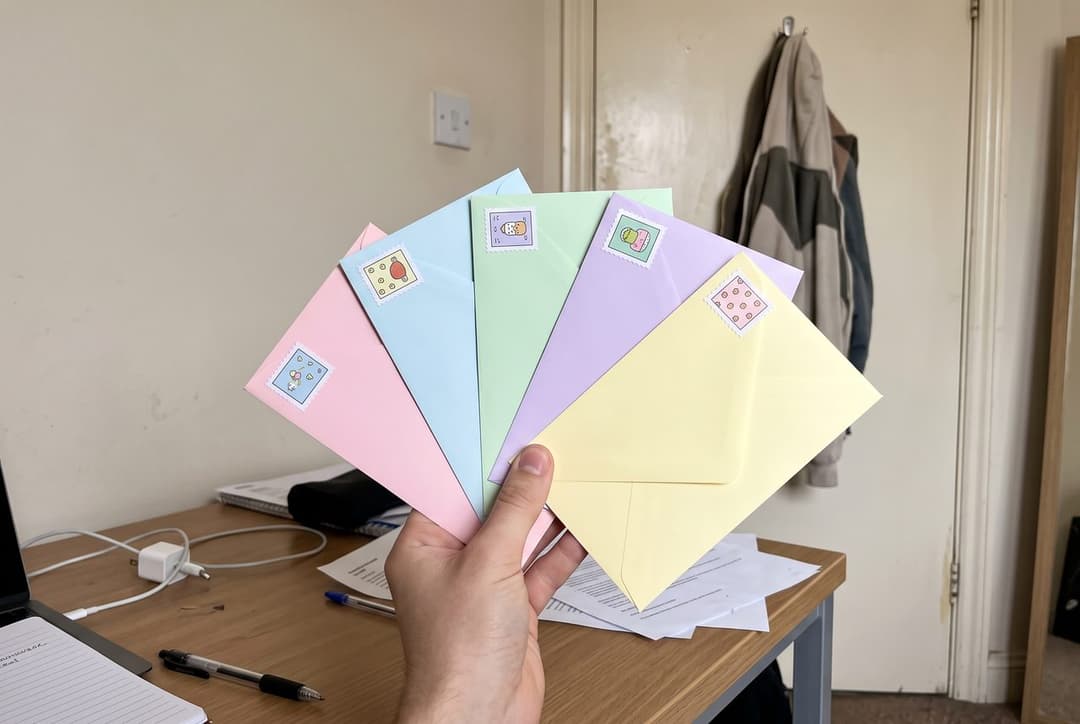
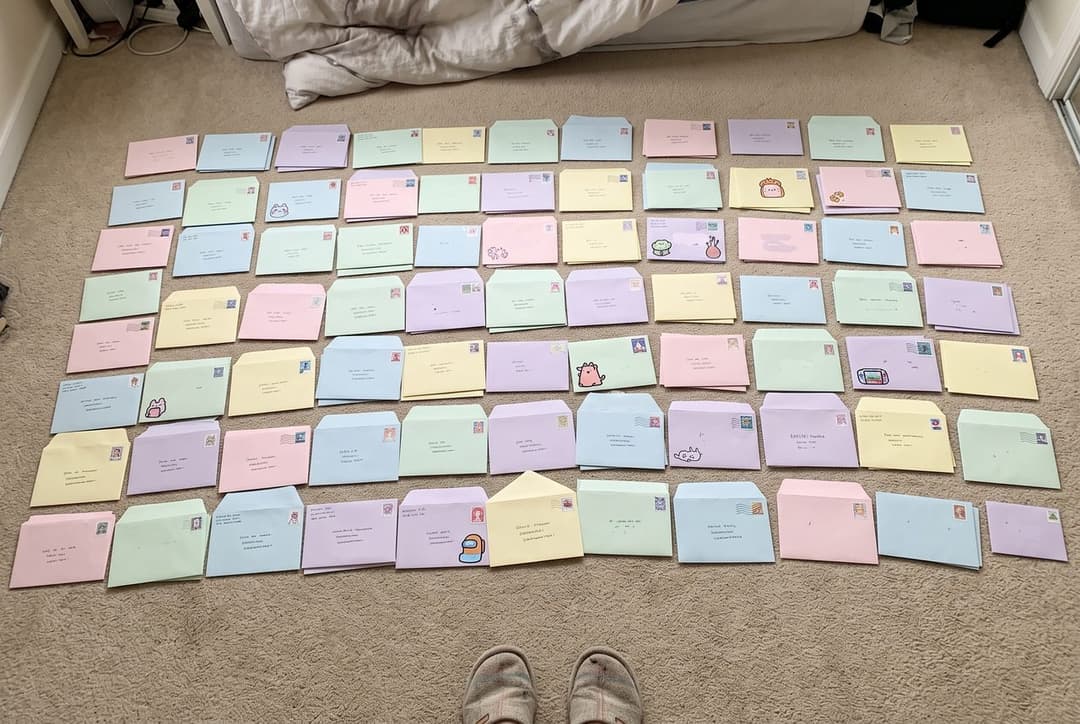
MailClubly is one of the largest hosts of mail clubs, with hundreds of them: enough to show what clubs look like once the launch video is over. As of November 2026, the typical club with paying members has fewer than ten of them. About one club in ten has 25 or more, and the largest has well over a hundred.
Counting everyone who ever signed up, including members who later cancelled, gives the same picture:
| Of the clubs that get a first sign-up | Share |
|---|---|
| Reach 10 sign-ups | about 1 in 4 |
| Reach 25 | about 1 in 10 |
| Reach 50 | about 1 in 25 |
| Reach 100 | about 1 in 50 |
The clubs that reach 10 sign-ups get there about two weeks after their first one. Growth comes as a burst at launch, from people who already follow the artist, more than as a slow climb afterwards. Many of these clubs are in their first months, so read the figures as what a club's first year tends to look like.
Creators outside our platform describe the same thing. Kit Kat Kanvas: "I probably had only one subscriber for about the first 4 months" (YouTube at 8:17). Claudine Castro filmed her launch with "a whopping six members" (YouTube at 0:28).
The big numbers in the press are real, and rare. The Hustle, citing the Wall Street Journal, reported in March 2026 that Christine Tyler Hill's $8 zine had about 2,000 subscribers and brought in about $14,000 a month (The Hustle). That is revenue, before stamps and printing. She explains the growth herself:
"The only reason mine grew so fast is that I went viral, which is like winning the lottery."
In the same article she adds: "Don't expect it to make money until you've put in the time sharing your work and building a connection with people." Chantal Leonhardt, who got 25 sign-ups in her first month, is blunter: "if you want to start a mail club because you think it's a great income stream, stop right now" (YouTube at 3:01).
So plan your costs for 5 to 25 members, not for 500. At that size a club pays for its supplies and some of your time.
What turns it into income is more members, far more than a lower fee. Finding them has its own guide: how mail clubs get subscribers.
What a price rise costs
The Forever stamp went from $0.78 to $0.82 in July 2026, and a price that was fine at launch gets tight. Fiorenza Art started at $8, watched the stamp rise, and moved to $9.
"Actually, whenever you increase your pricing, you are going to lose members. I lost so many members when I did this and I'm still actually trying to recover from that and I don't think I ever will."
She does not say how many left. What can be worked out is how many you can afford to lose. On the example envelope and our free plan, an $8 club keeps $5.01 per envelope and a $9 club keeps $5.90. The rise pays for itself unless more than 15 members in 100 leave because of it. From $10 to $11 the line is about 12 in 100. These are estimates, and they count money only.
Two ways to avoid finding out:
Price with a cushion from the start. Fiorenza's own advice, right after the quote above, is to set the number a dollar above what feels comfortable, because changing it later puts people off.
Raise it for new members only. alivia laura opened her Cozy Reader Club at $10 for the first 45 people and $11 after that, and told the first group they had locked in $10 "for life essentially" (YouTube at 18:37). Nobody who already pays is asked for more, so nobody has a new reason to leave, and the average price still rises as members come and go.
On MailClubly this is how a price change works: existing subscribers keep the price they signed up with (prices and plans). On other platforms, check what happens to current members before you change the number.
Common mistakes
Copying another club's price. Their envelope is not yours. alivia laura describes the trap: it is easy to think "I'm only going to charge five dollars a month because I'm just sending like paper in the mail", when the stamp alone is most of a dollar (YouTube at 19:42). Add up one envelope first, then compare.
Contents that cost too much for the price. Hannah Gustafson started with fine art prints and dropped them: "that really cut into my margins," and people opening the envelope on camera took them for postcards anyway (YouTube at 10:23). Outlaw Creative's gloss paper cost "about $4.60 to print, and that should have been more like $2" (YouTube at 4:01). Cost every item before you promise it.
Ordering for members you do not have. Print services sell in steps. JEM AND COZY's print shop offers 100, 250 and 500: "I had to jump to 500 even though I only have 320 members" (YouTube at 12:57). Print small runs at home, or choose a service that sells the quantity you need, even at a higher unit price. A discount on 500 is no saving if 180 of them stay in a drawer.
Forgetting tax. Every figure on this page is before tax. Amaya Jade sets aside 30% of her revenue for it, and Katie Mai's $10 per letter becomes "around $7 after taxes". Move a share of every payout to a separate account from the first month, and ask an accountant where you live what that share should be.
Questions readers ask
Do mail clubs make money?
Per envelope, yes: a $10 envelope with a dollar of contents and one stamp leaves about $7 after fees. Per month, most clubs make little, because most clubs are small. A club of 10 members leaves about $68 a month on the example in this guide.
Are mail clubs profitable?
On paper, yes, from the first member, as long as the price covers the envelope and the platform has no monthly fee. Whether a club pays for your time is another matter: in the estimate above, 24 members pay for about 11 hours a month at $15 an hour.
How much is a mail club subscription?
Most cost $8 to $12 a month with US shipping included. The typical US club on MailClubly charges about $11 a month. Mail Club Hub's count of more than 1,000 clubs puts the median at $10, though it does not publish its method (State of Mail Clubs 2026).
How much should I charge for my mail club?
Work forwards from the envelope. Add the contents, the stamp and the fees, add what you want to keep per envelope ($4 to $6 is Hannah Gustafson's rule), and round up. If the result is above $12, make the envelope lighter before you make the price higher.
How much does it cost to start a mail club?
Very little if you already own a printer: the first batch for 20 members is about $36 in contents and stamps on the example envelope, and a platform with no monthly fee costs nothing until someone pays. alivia laura spent "four or five hundred dollars" in her first month on supplies, a printer, a website and domains (YouTube at 19:16). Hannah Gustafson started with leftover wedding stamps and a $50 printer (YouTube at 5:50).
How many members do I need to make $1,000 a month?
About 150 at $10 on the example envelope (148 on our free plan, 134 on Pro), before tax and before your time. For scale: about one in 50 of the clubs that get a first sign-up on our platform has reached 100 sign-ups.
Your next step
Pack one real envelope. Weigh it, add up what is in it, and time yourself from blank paper to sealed flap. Put those three numbers in the calculator with 10 members, then with 25.
If you can live with the per-hour figure at 10 members, you have a club worth starting, and the start guide covers the rest. If the sums only work at 200 members, read how mail clubs get subscribers before you buy a stamp. To see what real clubs charge for what, browse the directory.

Article by
Alex Carlier
I build MailClubly, the platform indie artists use to run their snail mail clubs. Before this I spent years watching creators stitch subscriptions together from Etsy, Patreon, spreadsheets, and blind luck. MailClubly exists so they don't have to.
Ready to start your own mail club?
MailClubly handles payments, postage and your shipping schedule. Free to start, live in about ten minutes.
Related Articles
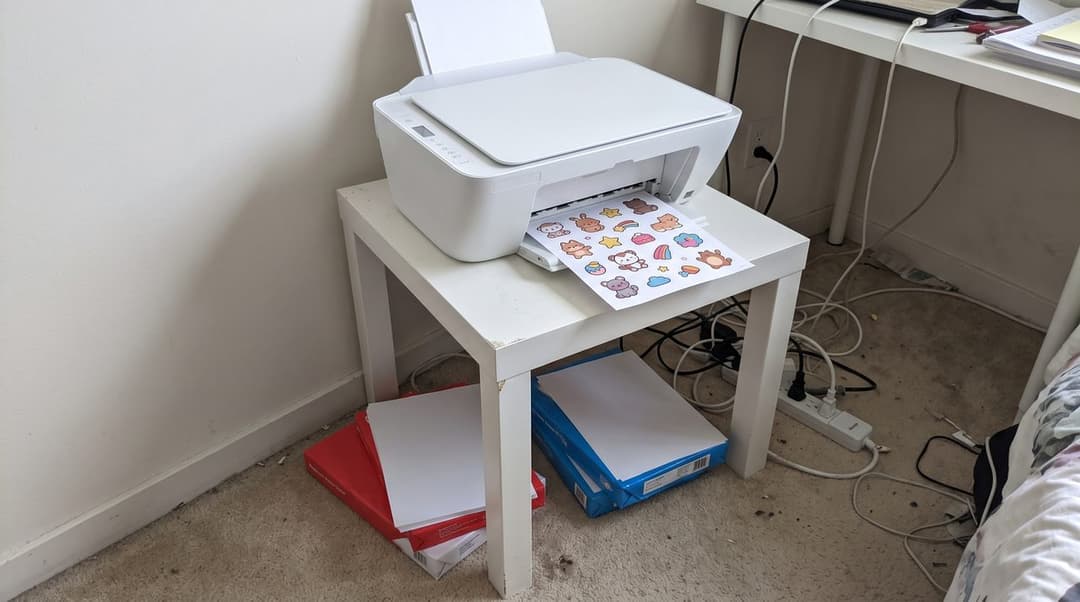
The best printer for stickers, art prints and cards when you sell by mail (2026), and the rest of the kit
Four printers for four situations, what each costs to run at 30 and at 500 prints a month, and what to skip, built on independent tests and on what mail club runners say they print on.
November 14, 2026
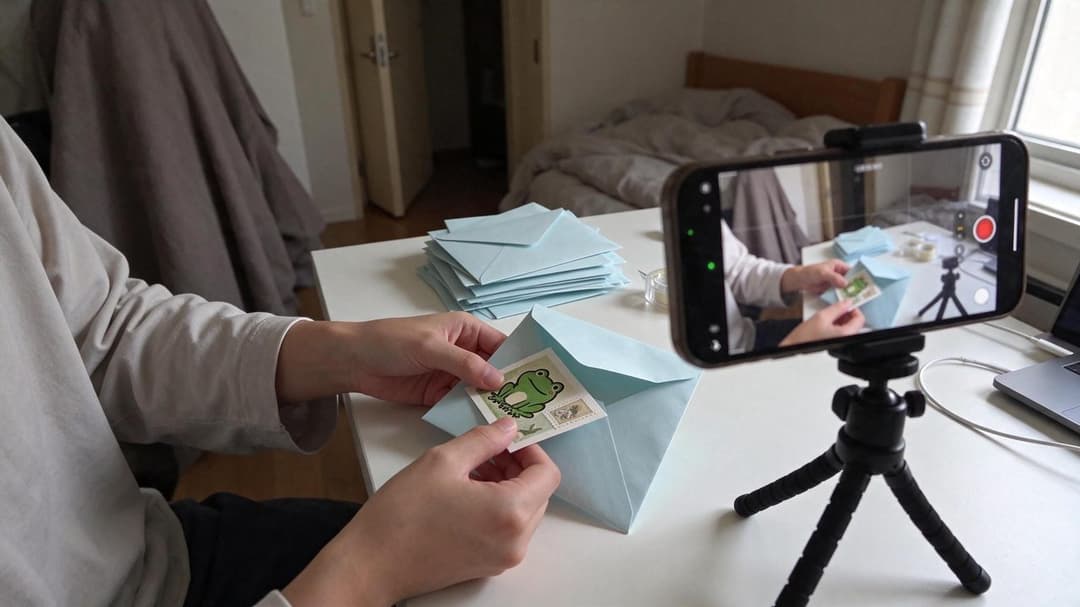
How mail clubs really get subscribers: what 42 club runners report, with their numbers
What people who run mail clubs say brought them members, with their own figures: how many followers turned into how many subscribers, how long it took, what stopped working, and what going viral cost.
November 14, 2026
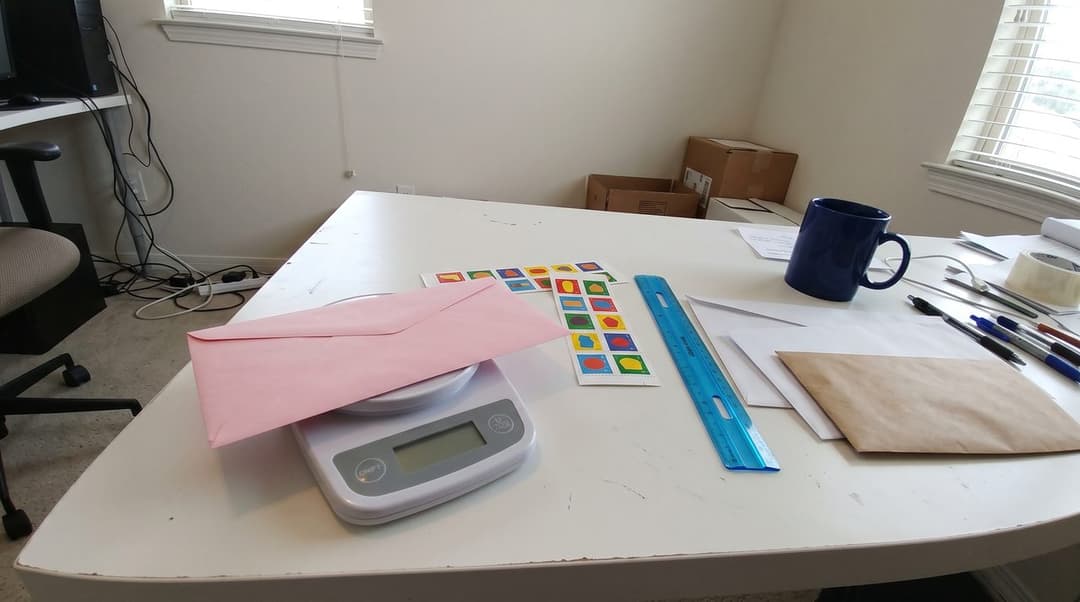
How many stamps does a mail club envelope need? USPS rates since July 12, 2026, with a calculator
One Forever stamp covers most club envelopes, until a backing board, a square envelope or a wax seal changes the class. Current USPS prices, the exact stamps for each case, and a calculator that starts from what is in your envelope.
November 14, 2026
How to start a snail mail club in 2026 (real numbers, no fluff)
A working playbook for artists who want to ship real mail to paying subscribers. Pricing, packaging, platforms, and a 30-day launch plan based on what actually works in 2026.
November 14, 2026
Sticker Mule alternatives and where to print for a mail club: prices compared (2026)
What printers charge for the five things mail clubs send, read from their own price calculators on November 13, 2026, with the cost per member and the cases where your own printer still wins.
November 14, 2026